

Business model development in Swedish ports - Adjustment to new volumes from offshore wind industry
Contact:
Sweden aims to achieve a full fossil-free energy system by 2045, and electricity demand is expected to rise substantially by then. As a renewable energy source, offshore wind can contribute largely to meet the future electricity demand, as Sweden has excellent offshore wind site conditions, a strong maritime industry, and some of the largest ports in Scandinavia. Swedish ports may play a crucial role in the green energy transition while enabling large-scale offshore wind deployment. However, ports face multiple challenges when preparing for offshore wind, especially an uncertain business case and low market readiness.
To address some of these challenges, this project investigated how ports may integrate offshore wind as a new business area into their business model. The study identified four main categories of business models that ports can pursue based on their primary function: Construction, Installation & Decommissioning (CID); Service; Combined and Auxiliary port models. It also provided recommendations on how to improve the sustainability of maritime operations between ports and wind farms by using alternative fuels, optimized vessel design, and enhanced port services. To increase visibility and promote the operational potential of the eleven Swedish ports that participated in the study, the project produced a Port Brochure mapping their infrastructure capacity for offshore wind.
Overall, the study emphasized importance of involving ports, wind developers and shipping agencies in collaborative platforms that are crucial for de-risking and implementing offshore wind projects. The report is intended to serve the port authorities as a general guidance in understanding needs of the industry and as a support tool when evaluating decisions about expanding their business into offshore wind. Both the report and the brochure provide valuable sector-specific insights that may assist policymakers and industry stakeholders in fostering dialogue and engagement toward the green energy transition.
-
 Svensk sjöfart växer igen
 -
 Sjöfarten når inte sina 2030-mål
 -
 EU:s klimatkrav kan flytta utsläpp från luft till hav
 -
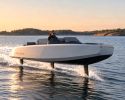 Ny testmetod för foilande fartyg
 -
 DNV: satsa på energieffektivisering och bygg fartyg som klarar fel bränsleval
 -
 Sommarjobb bidrar till att säkra svensk sjöfarts framtida kompetens
 -
 Vad händer när staten behöver hamnen? Se seminariet i efterhand
 -
 Sjöfarten behöver ta större plats på Transportforum 2027 – skicka in abstract innan 30 augusti
 -
 Regeringens maritima strategi lyfter forskningens betydelse – men ger en ofullständig bild av dess finansiering och struktur
 -
 Godsvolymerna till USA ökade trots Trumps tullar


