

No more fossil fuel from 2035
Contact:
This report examines how maritime transport could transition to fossil-free operations by 2035 and long-term sustainability. That was grounded by a hypothetical global ban of fossil fuels, following a climate crisis in 2025. The pre-study analysed renewable fuel availability, technological options and changes in transport patterns, and combined system-level analysis with stakeholder insights to identify feasible transition pathways.
Shipping is currently almost entirely dependent on fossil fuels and faces structural challenges in decarbonisation, including long vessel lifetimes and limited suitability of battery-electric solutions for long-distance transport. While biofuels may enable short-term reductions, sustainable biomass is scarce and competed for across sectors. Hydrogen-based electrofuels offer long-term potential but require major expansion of renewable electricity and infrastructure. The transition will therefore likely depend on a combination of renewable fuels alongside significant efficiency improvements. It may also lead to changes in global trade patterns, including slower shipping, reduced transport demand and increased regionalisation of production.
A central element of the study was a stakeholder workshop using a World Café format, involving more than thirty participants from industry, authorities and research. The workshop explored challenges, opportunities, solutions, and initial roadmaps for the transition.
Key challenges identified include the rapid scaling up of renewable energy systems, infrastructure constraints, and the complexity of transforming multiple sectors simultaneously. Participants also highlighted geopolitical uncertainties, limited shipyard capacity for retrofitting, and the importance of behavioural change and reduced energy demand.
-
 Svensk sjöfart växer igen
 -
 Sjöfarten når inte sina 2030-mål
 -
 EU:s klimatkrav kan flytta utsläpp från luft till hav
 -
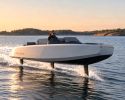 Ny testmetod för foilande fartyg
 -
 DNV: satsa på energieffektivisering och bygg fartyg som klarar fel bränsleval
 -
 Sommarjobb bidrar till att säkra svensk sjöfarts framtida kompetens
 -
 Vad händer när staten behöver hamnen? Se seminariet i efterhand
 -
 Sjöfarten behöver ta större plats på Transportforum 2027 – skicka in abstract innan 30 augusti
 -
 Regeringens maritima strategi lyfter forskningens betydelse – men ger en ofullständig bild av dess finansiering och struktur
 -
 Godsvolymerna till USA ökade trots Trumps tullar


